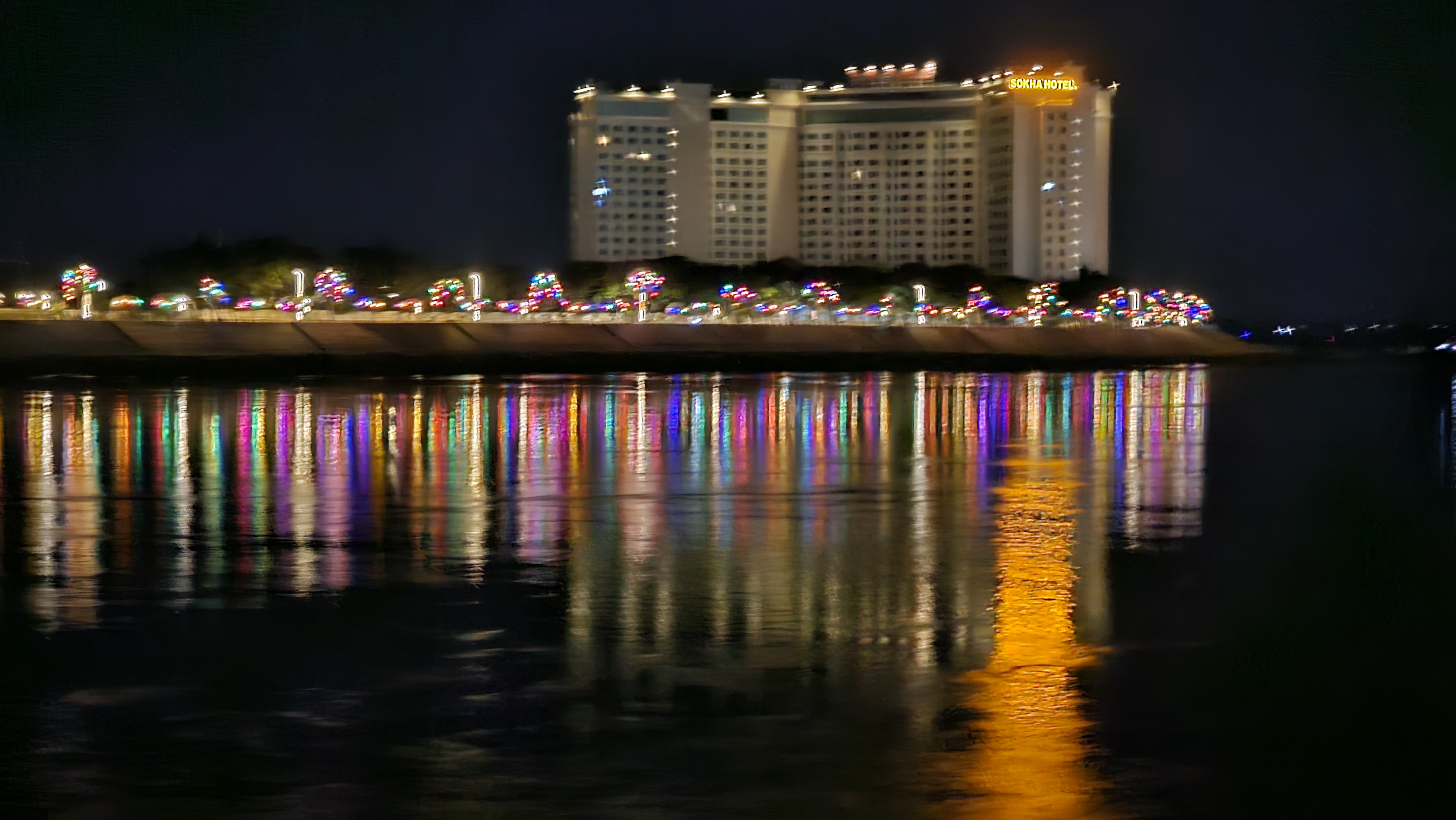
Introduction + Why I Chose This Trip + First Impressions
Phnom Penh feels different from most capital cities in Southeast Asia.
It does not hit you with the same chaos as Bangkok, the endless motorbike madness of Ho Chi Minh City, or the polished skyscraper overload of Singapore. Instead, Cambodia’s capital feels slower, calmer, and honestly a bit sleepy at times.
And I mean that in a good way.
I have visited Phnom Penh twice now, and both times I left with mixed emotions. On one hand, it is a genuinely pleasant city to spend time in. The riverside areas are relaxing, the food is excellent, prices are affordable, and the locals are some of the friendliest people I have met while travelling around Southeast Asia.
But beneath that calm atmosphere is one of the darkest modern histories you will encounter anywhere in the world.
That contrast stays with you while exploring Phnom Penh.
One moment you are sitting beside the river enjoying cold drinks while watching the sunset, and the next day you are standing in places where unimaginable suffering happened not that long ago.
It makes Phnom Penh feel deeper somehow.
The city forces you to think.
My first impression arriving in Phnom Penh was honestly how relaxed everything felt. The roads were busy but not overwhelming, people moved at a slower pace, and there was less pressure compared to some neighbouring capitals. You can actually breathe here.
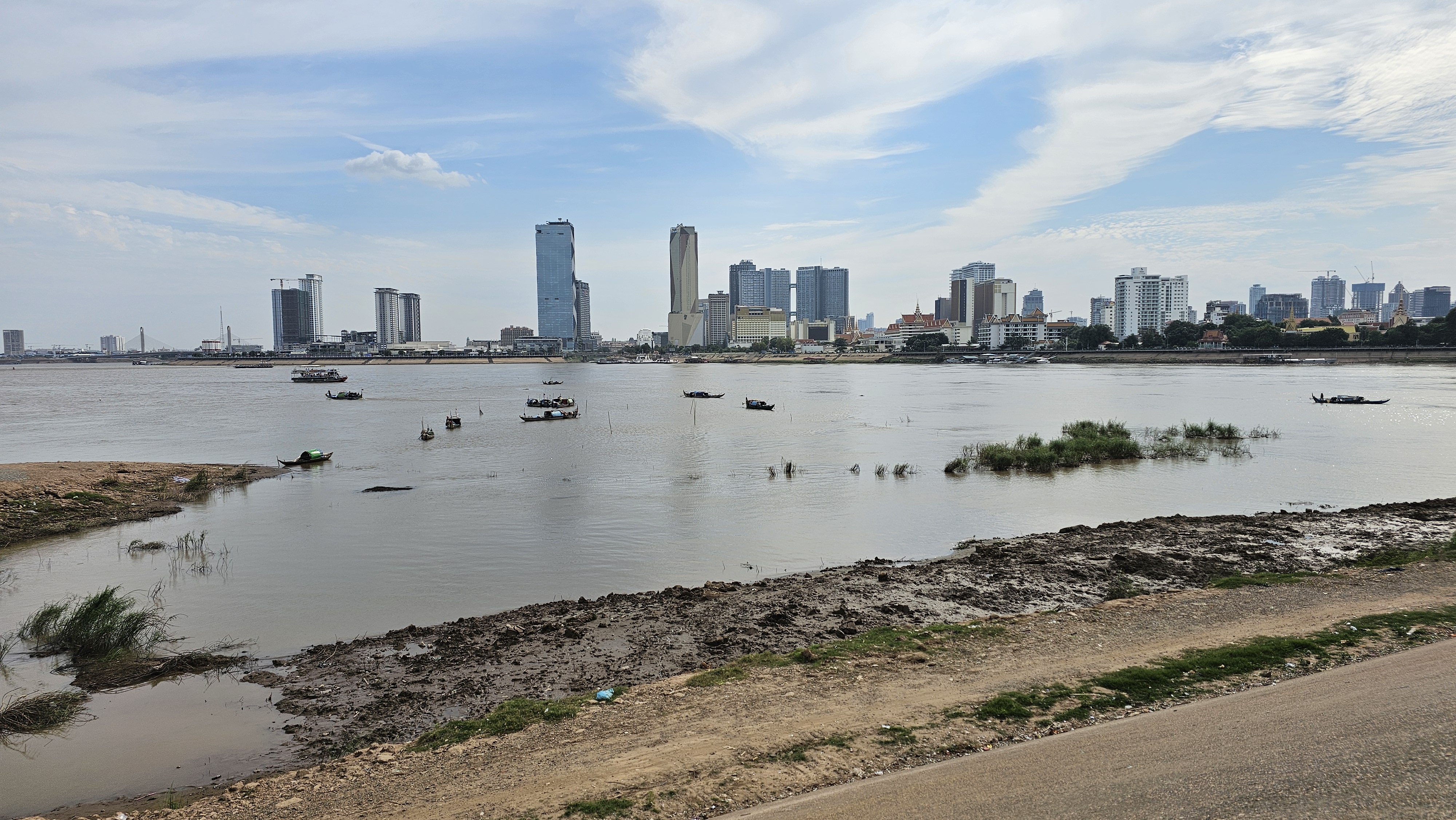
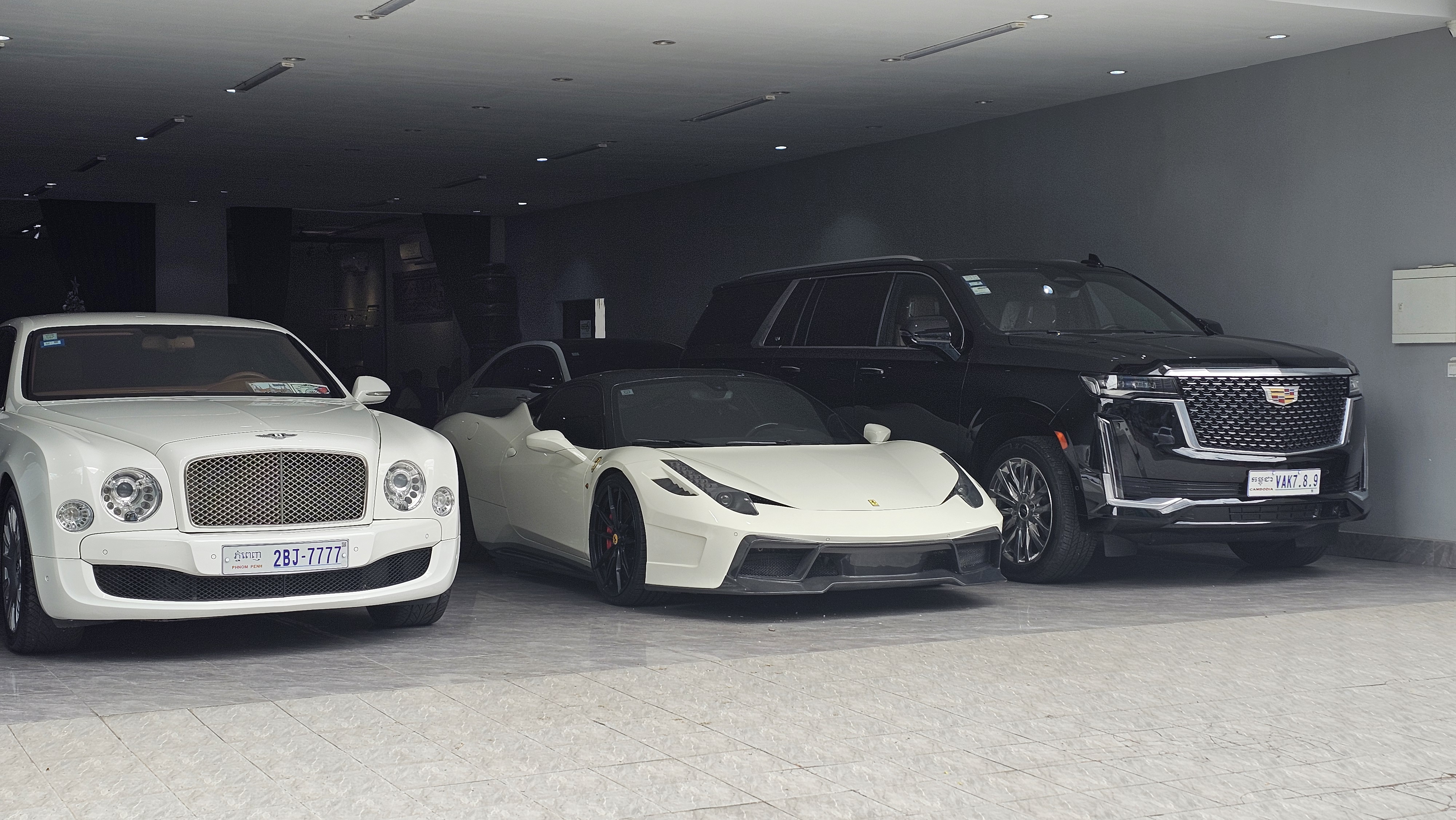
The skyline is changing rapidly too. Modern high-rise towers now sit beside older buildings and poorer neighbourhoods, creating a strange contrast between rapid development and visible poverty. One street can look modern and wealthy while the next still feels rough around the edges.
But somehow the city works.
Phnom Penh is not trying to be flashy. It is not trying to compete with giant global cities. Instead, it feels like a place where people genuinely live their daily lives while travellers quietly pass through on the way to somewhere else.
And honestly, I think many travellers underestimate it because of that.
For me, Phnom Penh became less about ticking attractions off a list and more about slowing down for a few days during longer Southeast Asia trips. It is a city where you stroll instead of rush. Sit by pools instead of running between landmarks. Wander riverside parks in the evening rather than chasing packed tourist itineraries.
That slower energy is exactly why I enjoyed it.
Arrival / Before the Experience
Arriving into Phnom Penh is surprisingly straightforward compared to some larger Southeast Asian cities.
Traffic exists of course, but it never felt as intense or stressful as Bangkok or Manila. Tuk-tuks are everywhere and apps like Grab make moving around the city very easy these days.
The weather though hits hard almost immediately.
Phnom Penh heat feels heavy and humid, especially during the middle of the day. It quickly becomes the kind of city where you appreciate air conditioning, shaded cafes, and hotel swimming pools far more than you expected.
The first thing I noticed during both visits was just how friendly people generally were. Hotel staff, cafe workers, tuk-tuk drivers, market vendors — most interactions felt relaxed and welcoming rather than overly pushy.
That instantly changes the atmosphere of a city.
Accommodation is also incredibly affordable compared to many other capitals. You can stay somewhere genuinely comfortable for surprisingly little money, which makes Phnom Penh a great place to slow down for a few days without destroying your travel budget.
Before arriving, I already knew the main reason I wanted to return was to revisit the darker historical sites properly again. The first visit left a strong impact on me and I felt those places deserved more than a rushed half-day tour.
At the same time though, I did not want the entire trip to revolve only around tragedy.
Phnom Penh deserves to be experienced beyond its painful history too.
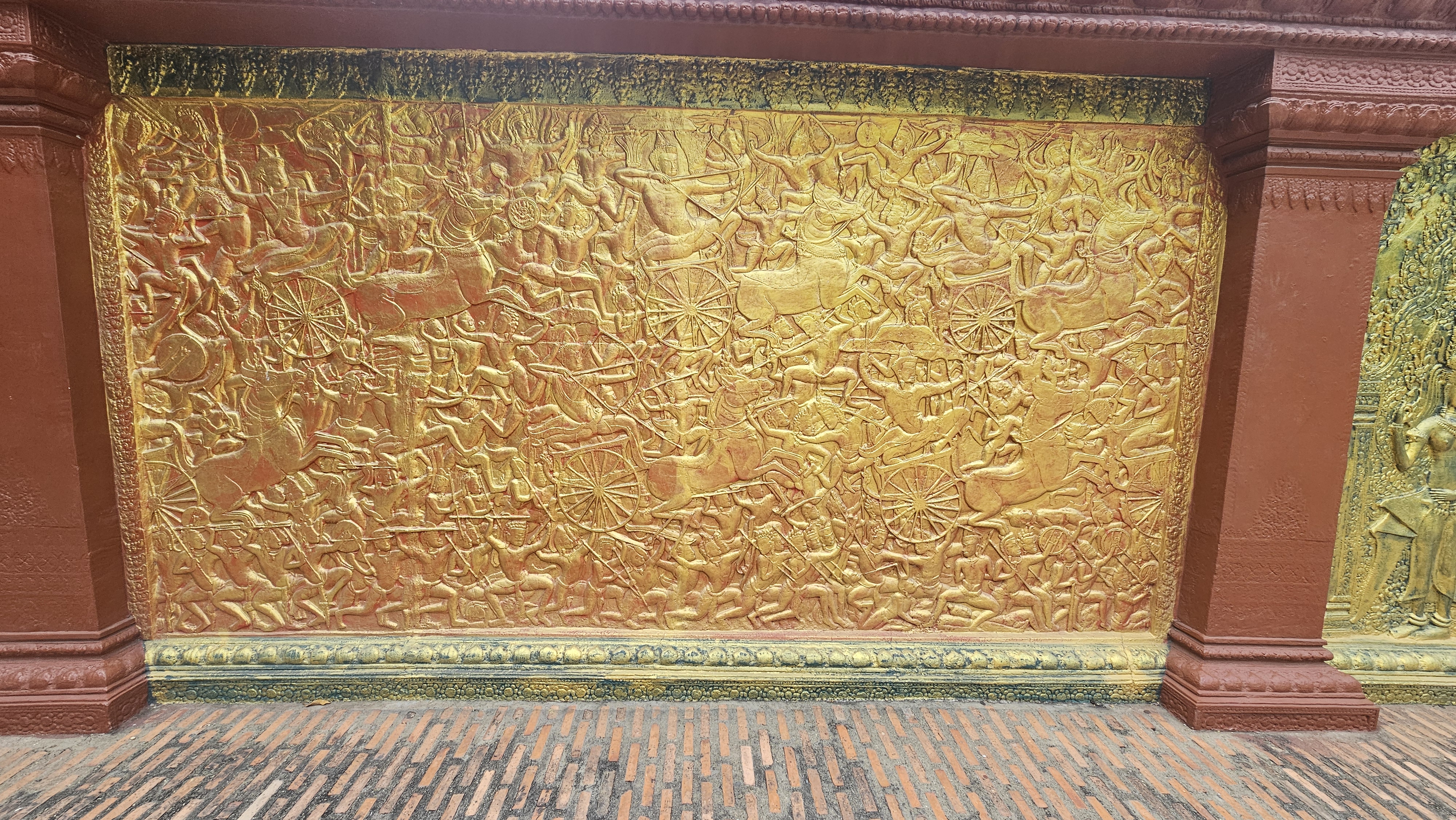
The riverside areas, parks, local food spots, rooftop bars, temples, and quieter neighbourhoods all contribute to the city’s identity. There is a surprisingly calm energy here that many travellers appreciate after visiting busier Southeast Asian destinations.
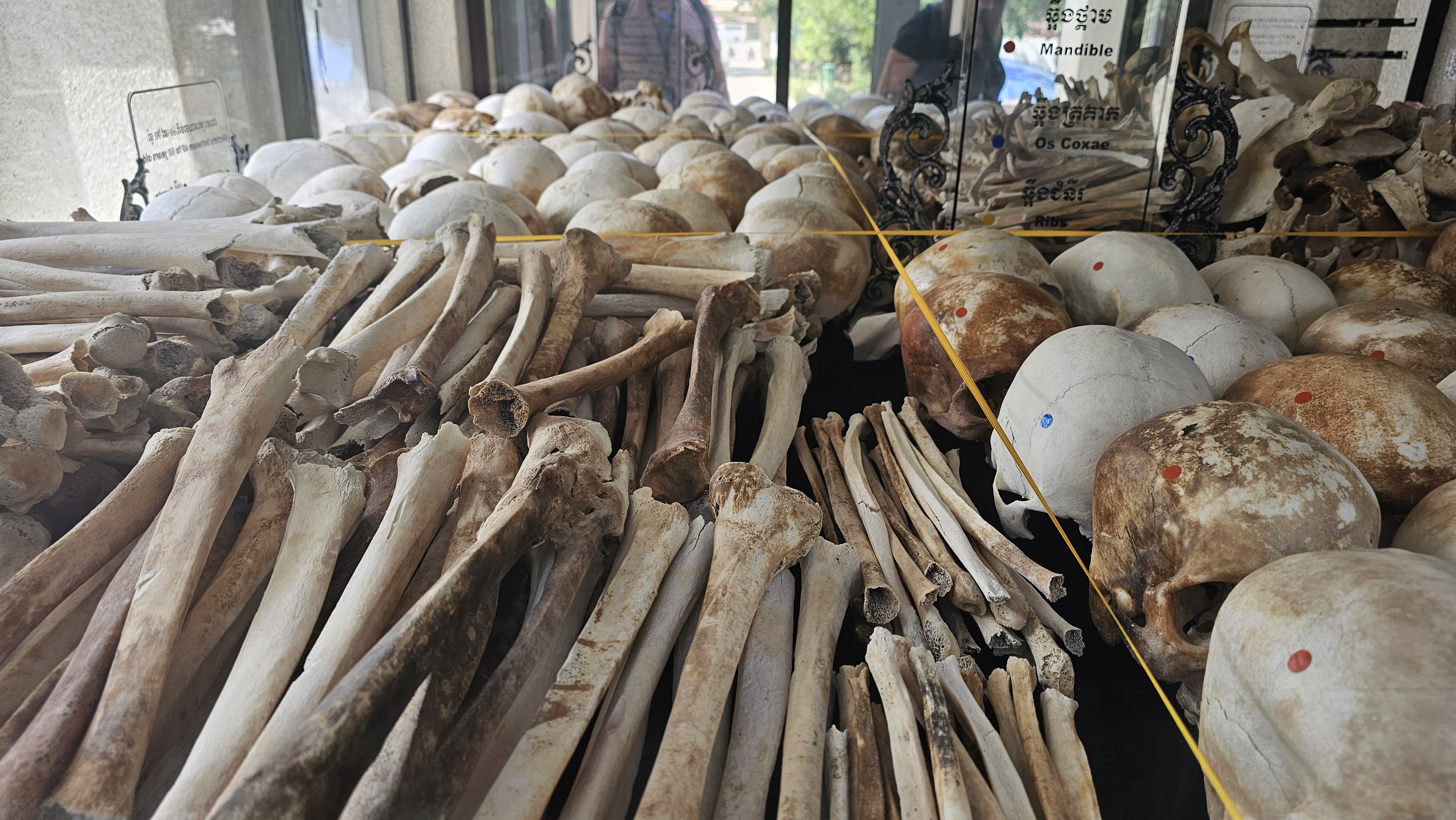
One thing I would recommend before visiting is mentally preparing for the emotional weight of certain sites. The Killing Fields and Tuol Sleng are not casual tourist attractions. They are deeply confronting places tied to very recent history.
It is difficult to fully understand Cambodia today without seeing them though.
Main Experience
Both times I visited Phnom Penh, I made the decision to visit Choeung Ek Genocidal Center — better known as the Killing Fields.
And honestly, it is one of the hardest travel experiences I have had anywhere.
Walking through the grounds while listening to the audio stories completely changes your mood. The calm surroundings almost make it harder to process what happened there. Birds sing, trees move gently in the wind, and yet you are standing in a place connected to horrific suffering and loss.
The stories stay with you.
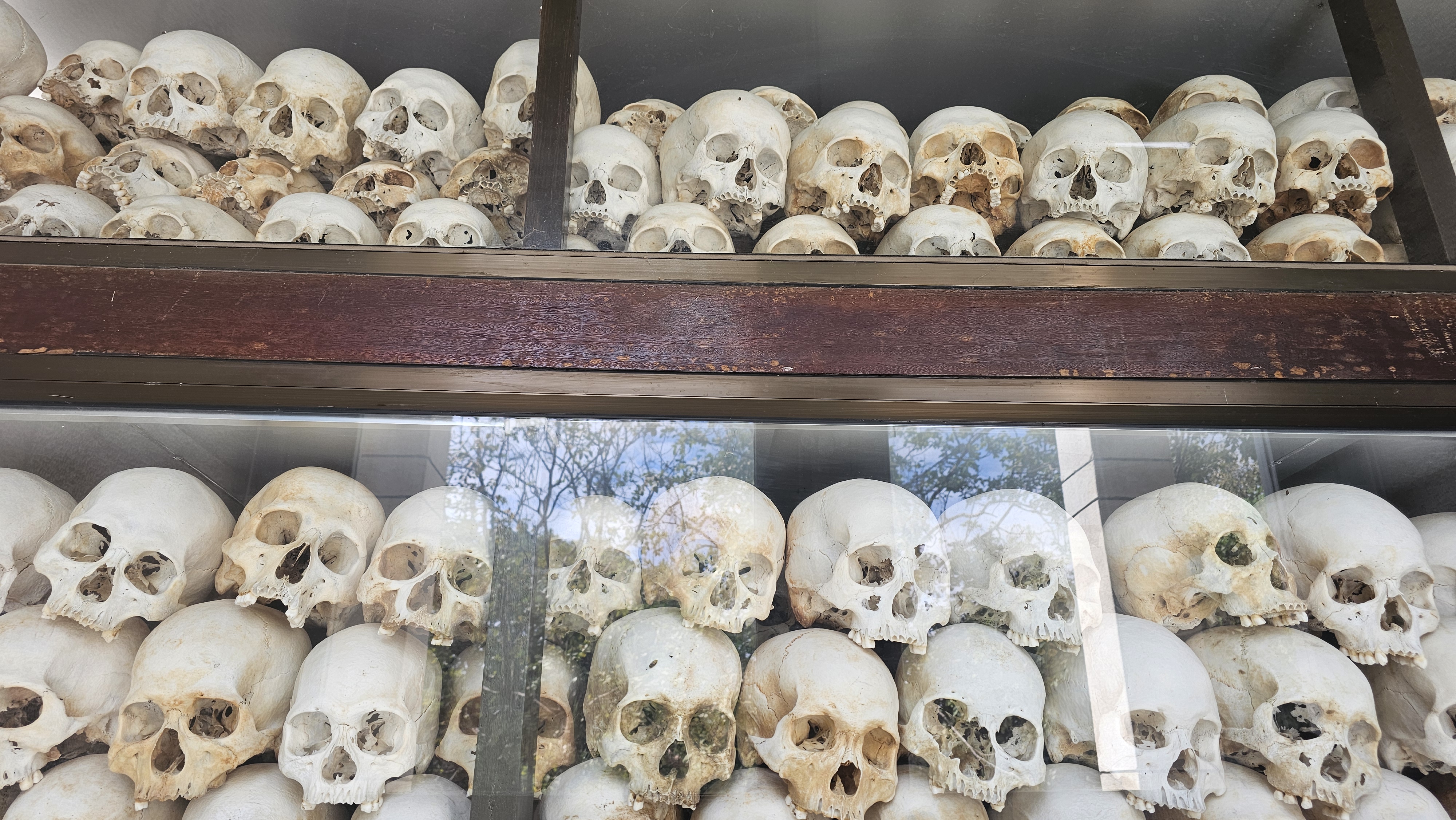
I do not want to turn this into a political article, but it genuinely makes you reflect on humanity and how quickly societies can collapse into violence. Especially watching events happening in parts of the world today, it becomes impossible not to think about how history repeats itself when people stop paying attention.
Being physically present there feels very different from simply reading about it online or watching documentaries.
The memorial stupa filled with skulls is something you do not easily forget.
Nearby, I also revisited Tuol Sleng Genocide Museum, the former school that became a prison during the Khmer Rouge regime.
That experience was equally disturbing.
Walking through the classrooms converted into prison cells while seeing photographs of victims creates an atmosphere that is difficult to describe properly. The simplicity of the rooms somehow makes it worse. Rusted bed frames, tiny cells, old barbed wire fencing — everything feels painfully real.
You leave those places emotionally drained.
But I still think they are important to visit.
History should not only be remembered when it is comfortable.
Thankfully, Phnom Penh itself balances those heavy experiences with a much calmer daily atmosphere afterwards. Once back in the city centre, life continues normally around you. Cafes fill with people chatting, food stalls cook along the streets, and locals gather along the riverfront in the evenings.
The contrast almost feels surreal at times.
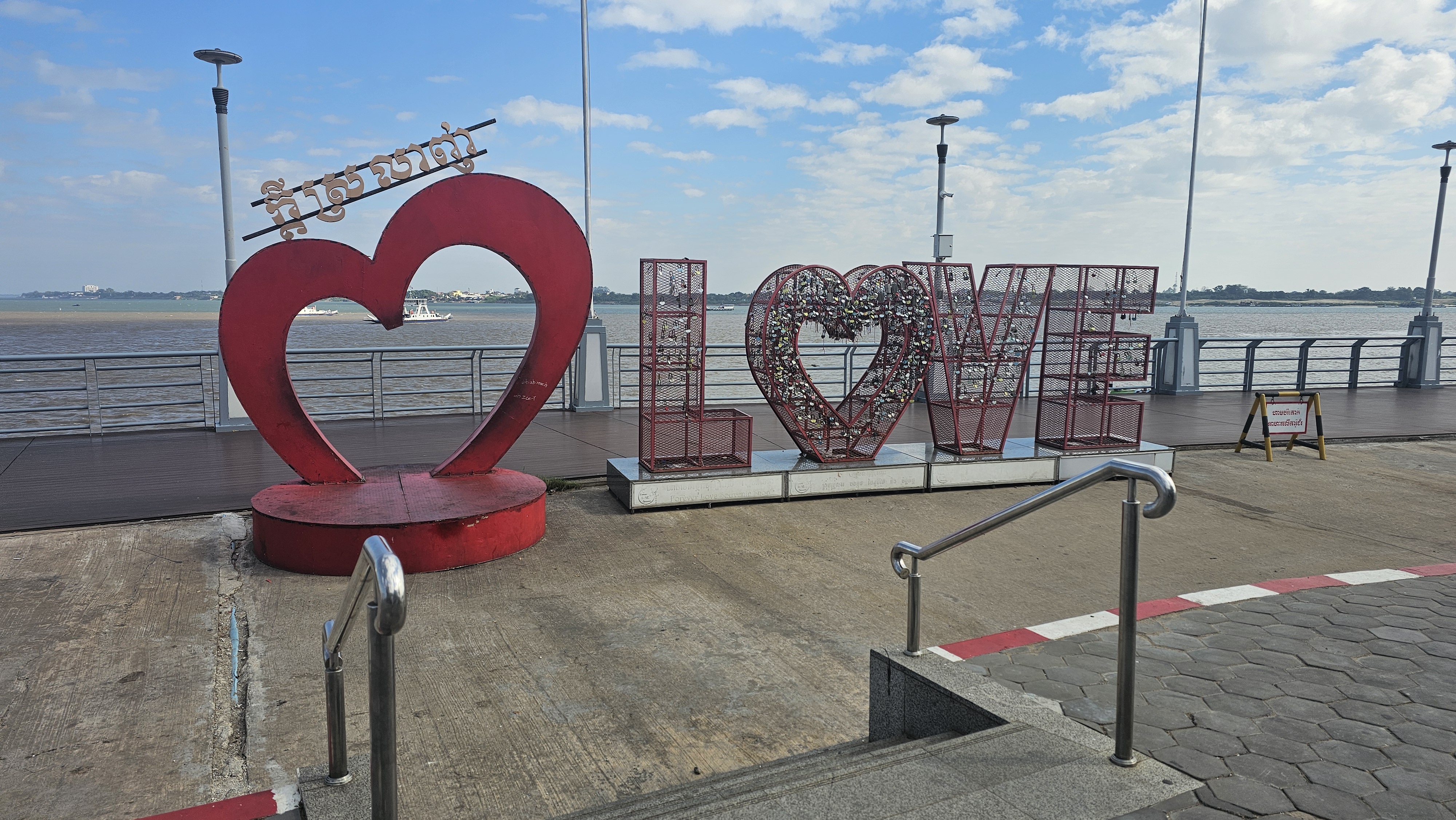
One area I enjoyed spending time around was the riverside promenade. Compared to a few years ago, it genuinely feels cleaner, safer, and more developed now. Families walk along the waterfront, people exercise in the evenings, and there is a much more relaxed atmosphere than I expected from a capital city.
Watching the sunset beside the river with cold drinks after a long humid day became one of my favourite simple routines in Phnom Penh.
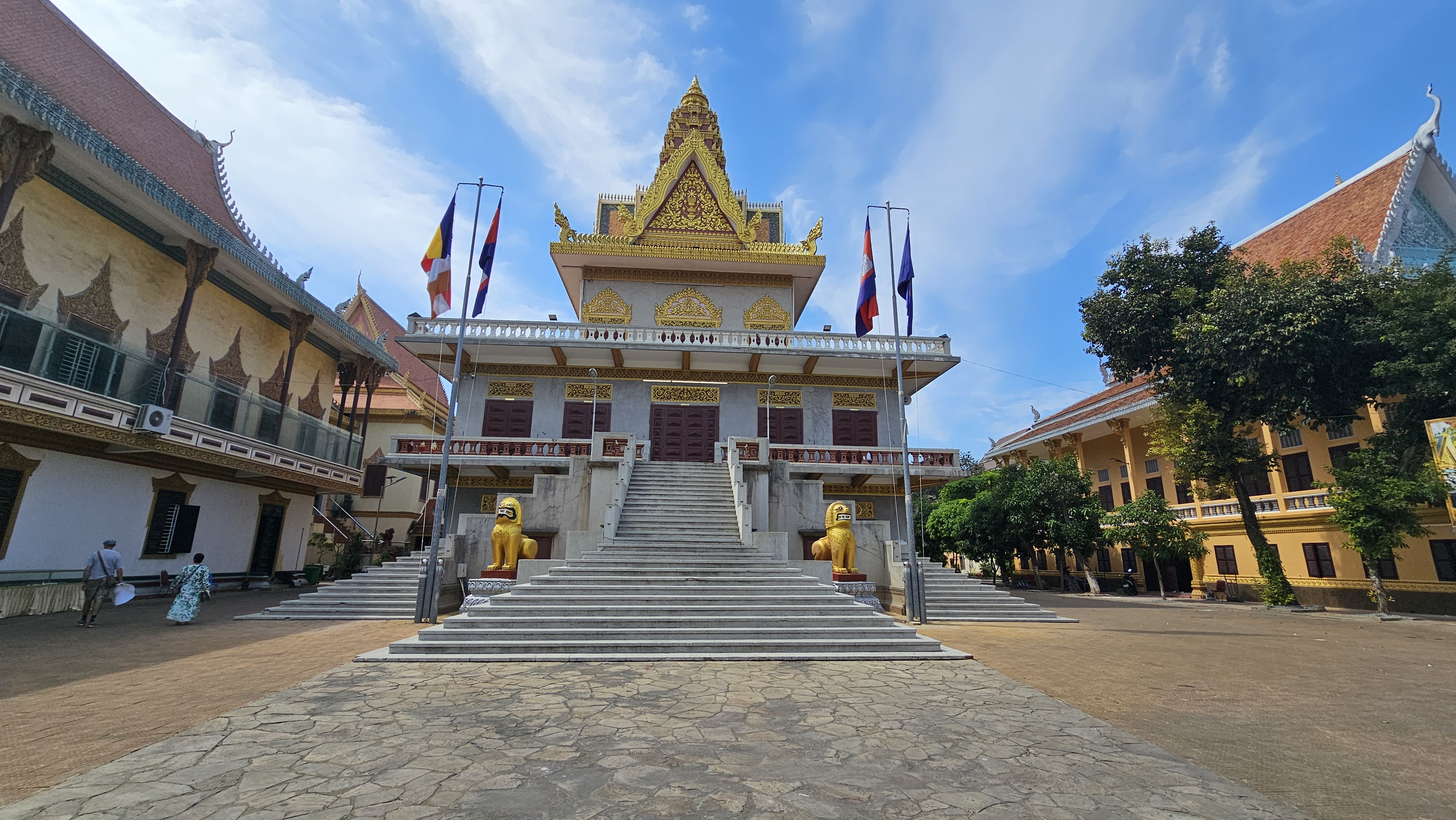
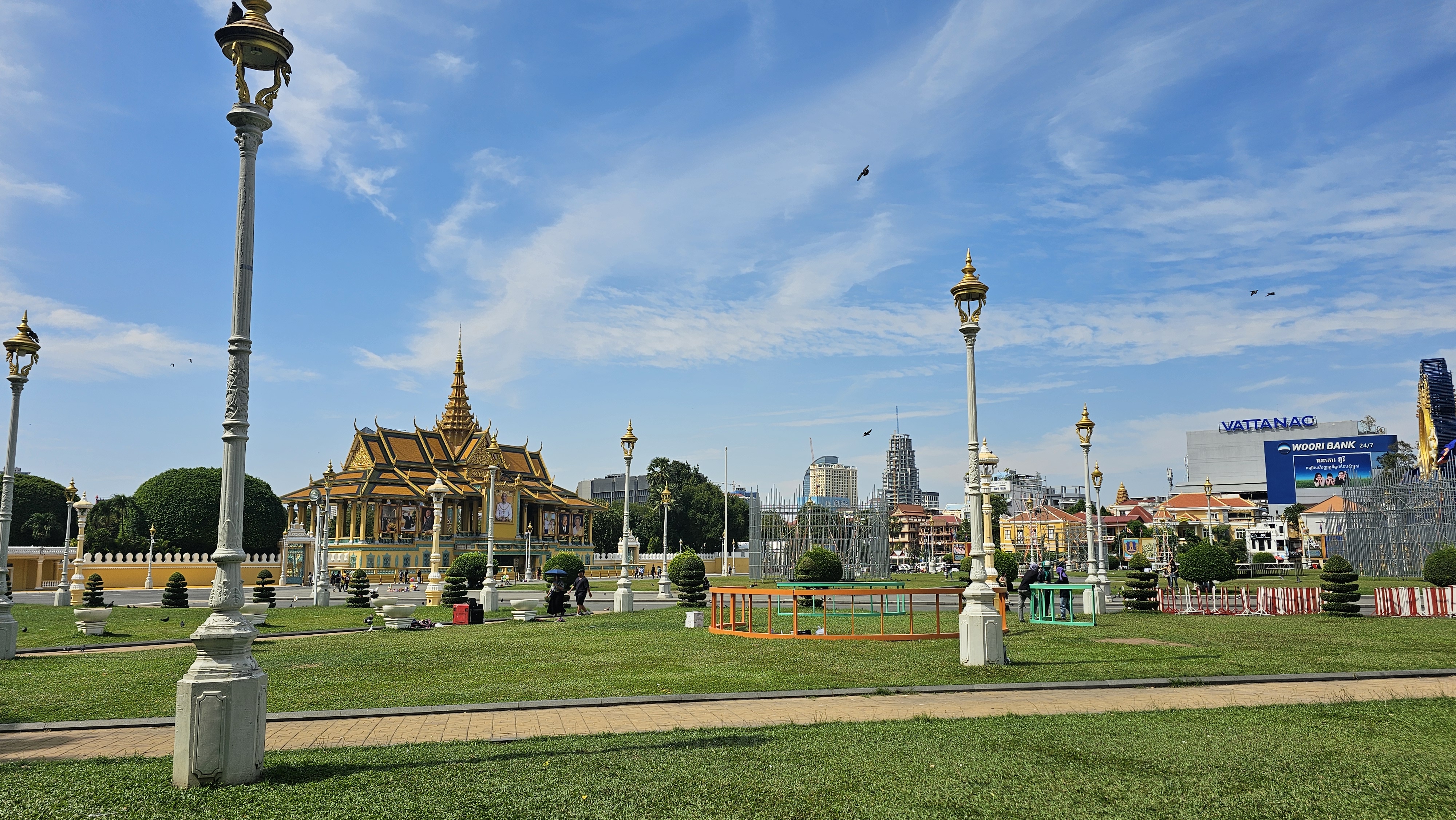
I also spent time exploring Royal Palace, which remains one of the city’s most beautiful landmarks. The golden roofs and traditional Khmer architecture stand out beautifully against the modern skyline growing around Phnom Penh.
It is not the biggest palace complex in Southeast Asia, but it feels elegant and peaceful. The surrounding gardens and temple areas offer a nice break from traffic and heat outside the walls.
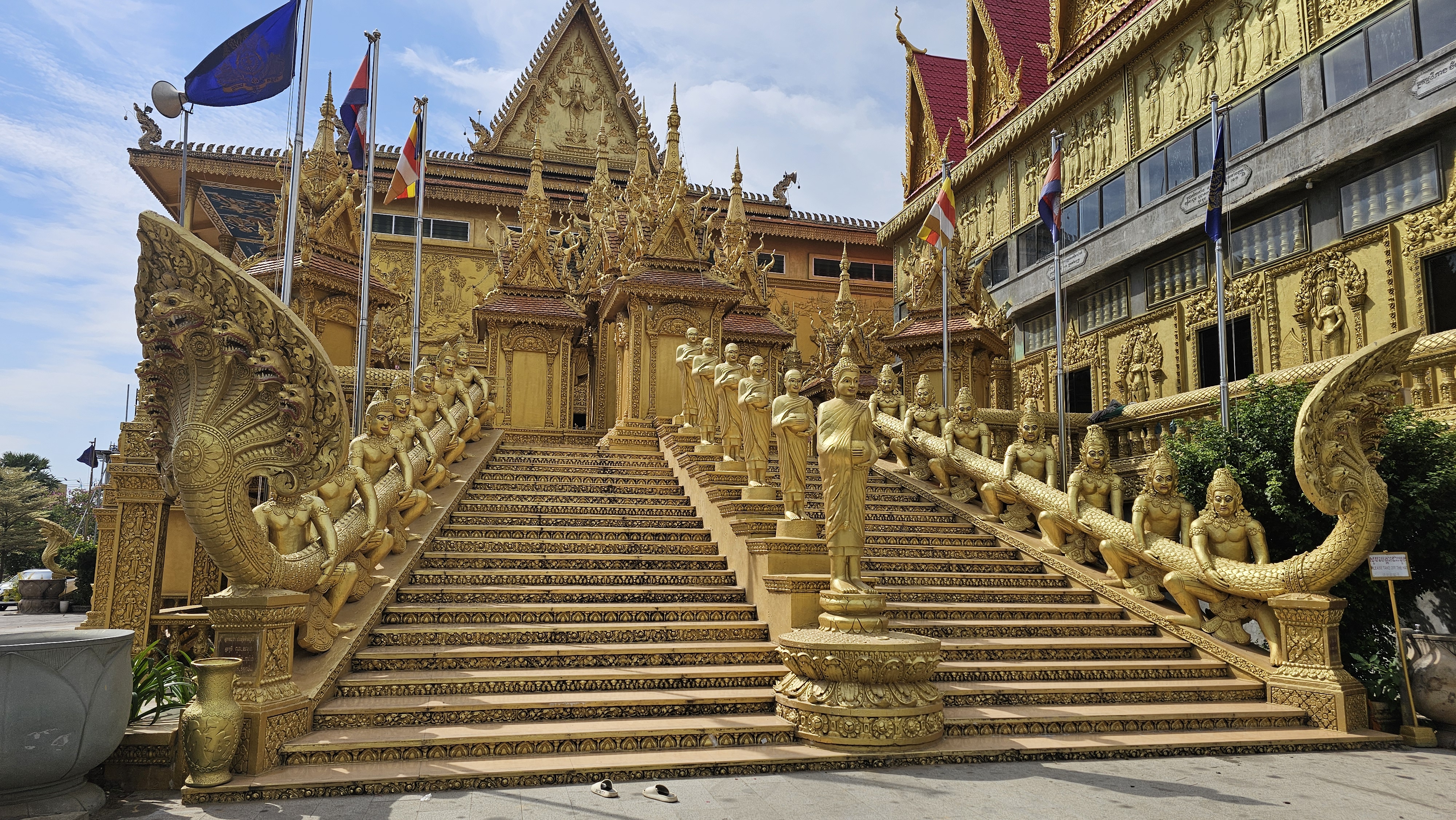
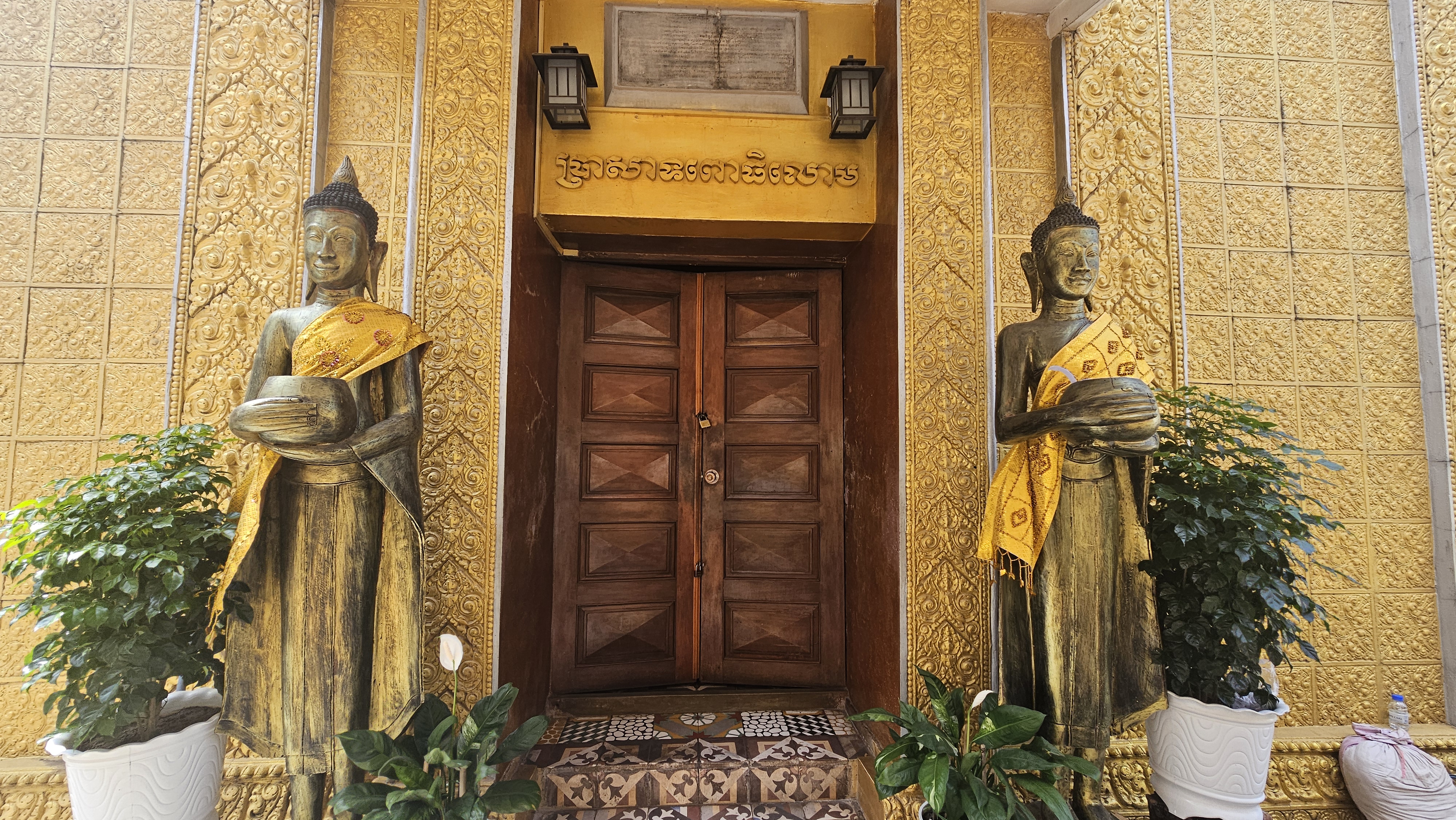
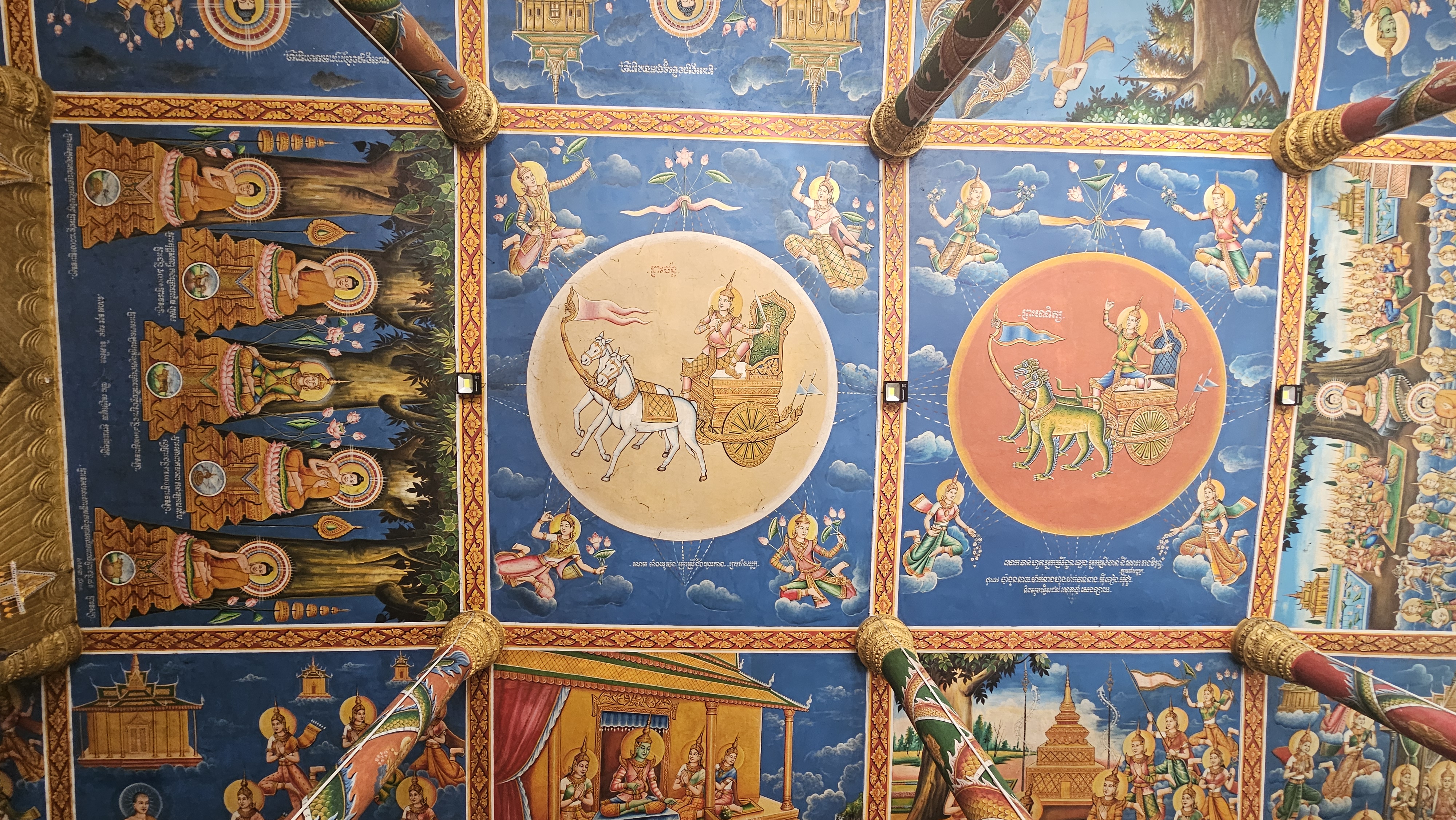
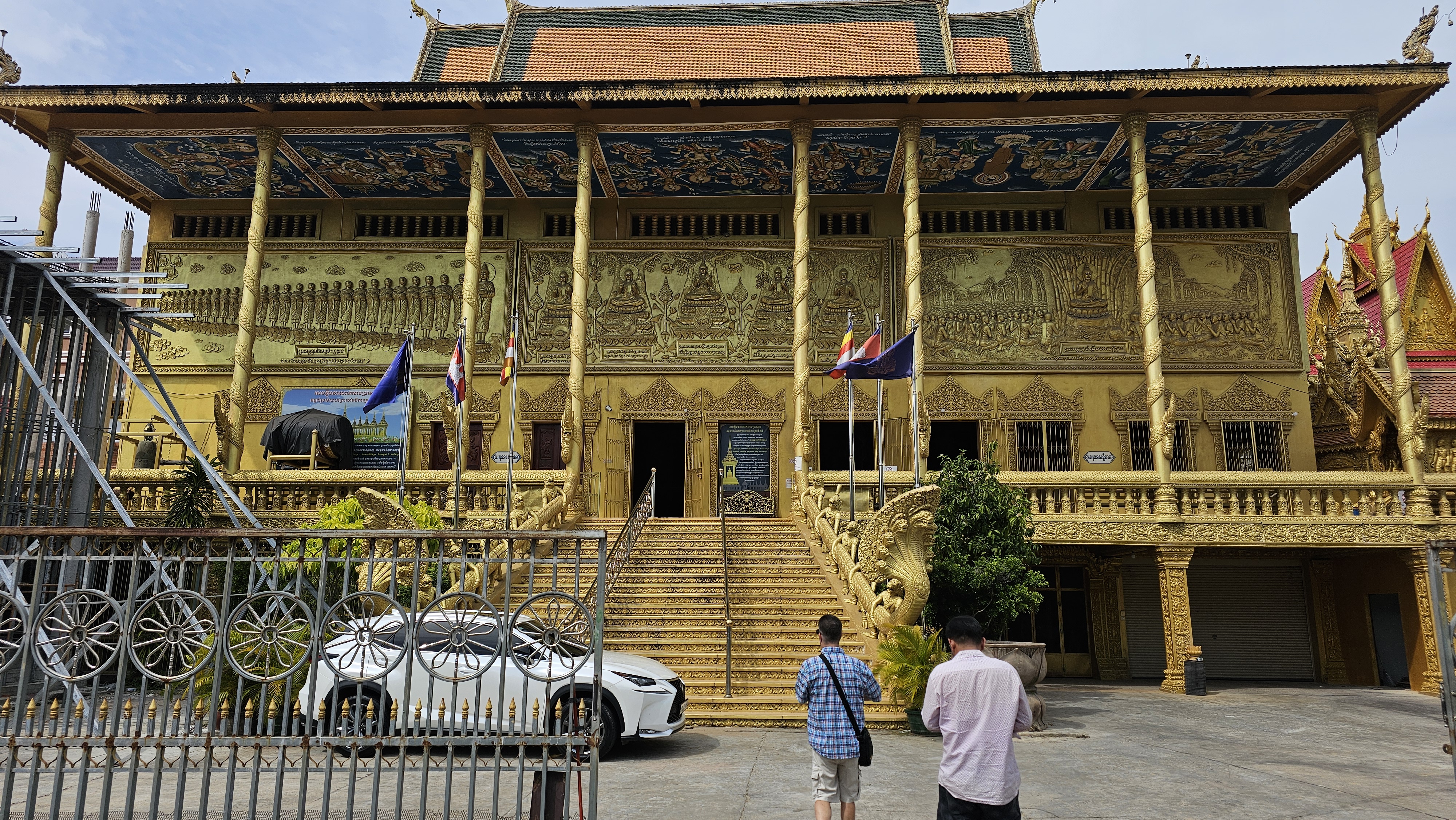
The city also has small temples scattered throughout the main districts, often hidden quietly between ordinary streets and modern buildings. I always enjoy finding these smaller places because they feel more connected to local life than major tourist attractions.
Shopping-wise, Central Market was probably my favourite area to wander around. Even if you are not buying anything, the building itself is beautiful inside. The art deco design gives it a completely different feel compared to typical chaotic markets around Southeast Asia.
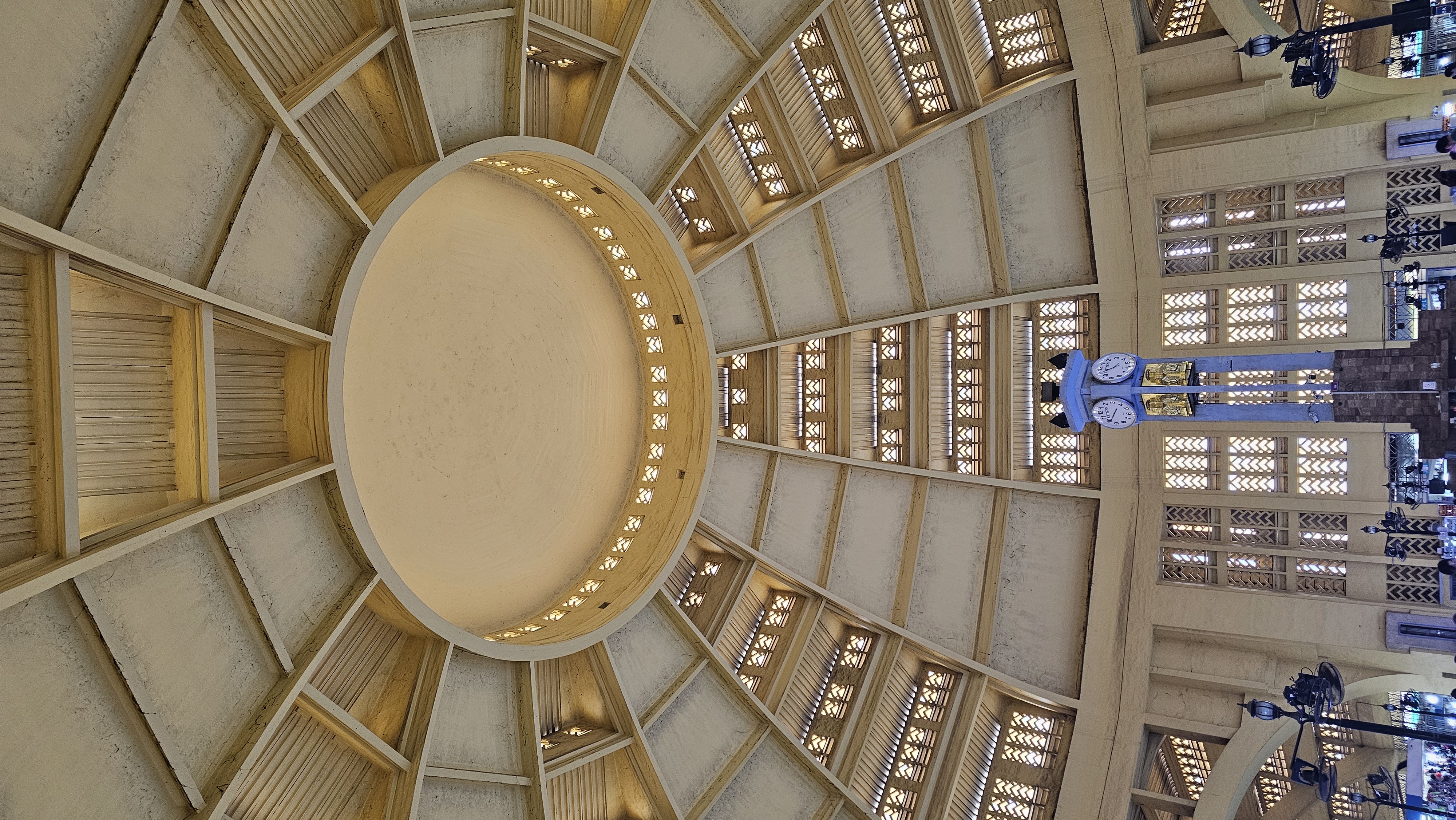
You can find everything there too.
Clothes, jewellery, electronics, souvenirs, food, watches, random gadgets — and yes, probably a few “genuine” designer products that somehow cost five dollars.
Bargaining is expected of course.
One area I really recommend visiting is Sangkat Chrouy Changvar across the river. It only takes around twenty minutes by bike or tuk-tuk depending on traffic, but the perspective looking back toward Phnom Penh is fantastic.
This is also where you can see the rivers meeting, which gives the area a surprisingly peaceful atmosphere compared to the busier central districts. I was told that during certain times of the year, especially around September, the river currents actually reverse direction due to seasonal flooding patterns.
Whether you are interested in the science behind it or not, it is still a cool place to escape the city centre for a while.
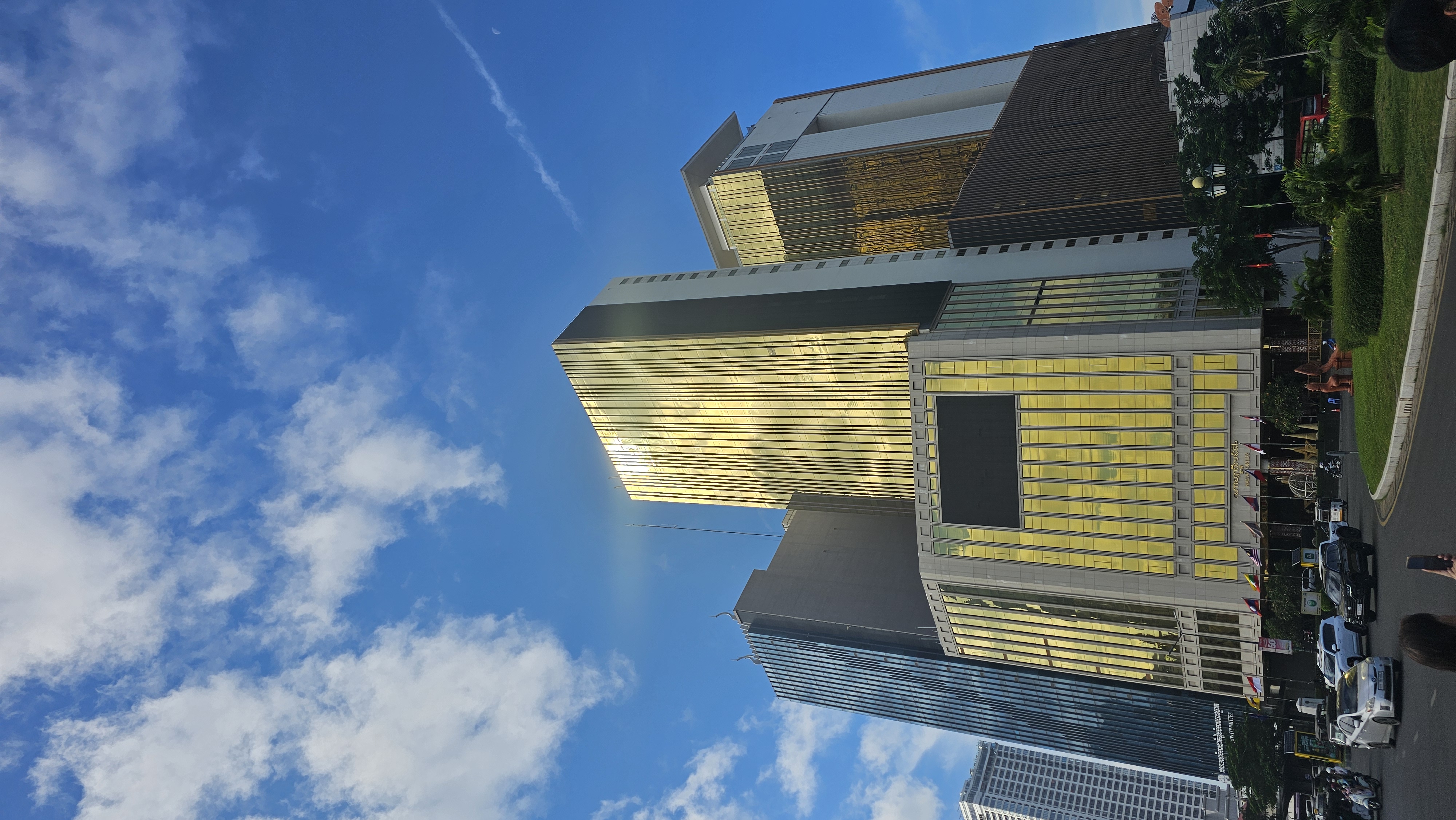
Another spot worth seeing is Independence Monument. Especially in the evening when traffic moves around it and the lights begin reflecting off nearby modern buildings, the area feels surprisingly modern and photogenic.
Some of the newer skyscrapers nearby have these gold reflective windows that look fantastic around sunset.
Again, Phnom Penh constantly gives you these contrasts between old and new.
One thing I appreciated during both visits was that Phnom Penh never felt exhausting. Unlike larger capitals where you constantly feel pressure to keep moving and sightseeing, here it felt acceptable to simply slow down.
Sit by the pool.
Have long lunches.
Walk slowly through parks.
Relax beside the river.
That slower pace became part of the appeal.
Hotels in the Area
Phnom Penh has a really solid range of hotels, and because prices remain relatively affordable, you can often stay somewhere far nicer than expected for your budget.
For luxury travellers, Raffles Hotel Le Royal remains one of the city’s most iconic stays. It has that old colonial-style atmosphere mixed with modern comfort, and honestly feels like stepping back into another era. Rosewood Phnom Penh offers something completely different with incredible skyline views, modern design, and one of the best rooftop experiences in the city. Meanwhile Sofitel Phnom Penh Phokeethra feels more spacious and relaxed, particularly if you want a quieter luxury stay away from the busiest roads.
For mid-range hotels, Aquarius Hotel and Urban Resort is a fantastic option with a rooftop infinity pool overlooking the city. After walking around Phnom Penh heat all day, that pool becomes very appealing. Plantation Urban Resort & Spa offers a calm hidden atmosphere surprisingly close to the Royal Palace area, while Ohana Phnom Penh Palace Hotel works brilliantly for riverside access and evening walks.
Budget travellers also have plenty of good options. Onederz Phnom Penh is modern, social, and ideal for backpackers wanting comfort without spending too much. Mad Monkey Phnom Penh is more party-focused but still popular with younger travellers exploring Cambodia. Meanwhile The Big Easy Phnom Penh offers a more relaxed hostel atmosphere while staying close to nightlife and restaurants.
Personally, Phnom Penh feels like the kind of city where a comfortable hotel with a good pool massively improves the experience.
The heat eventually catches up with you.
Highlights + Activities + Standout Moments
The strongest memories from Phnom Penh were honestly not dramatic tourist moments.
They were smaller things.
Watching locals exercise beside the river in the evenings.
Sitting in cafes while afternoon rainstorms rolled through the city.
Wandering quieter streets where monks passed by modern coffee shops.
Seeing the skyline slowly lighting up across the water at sunset.
There is a calmness to Phnom Penh that surprised me both times I visited.
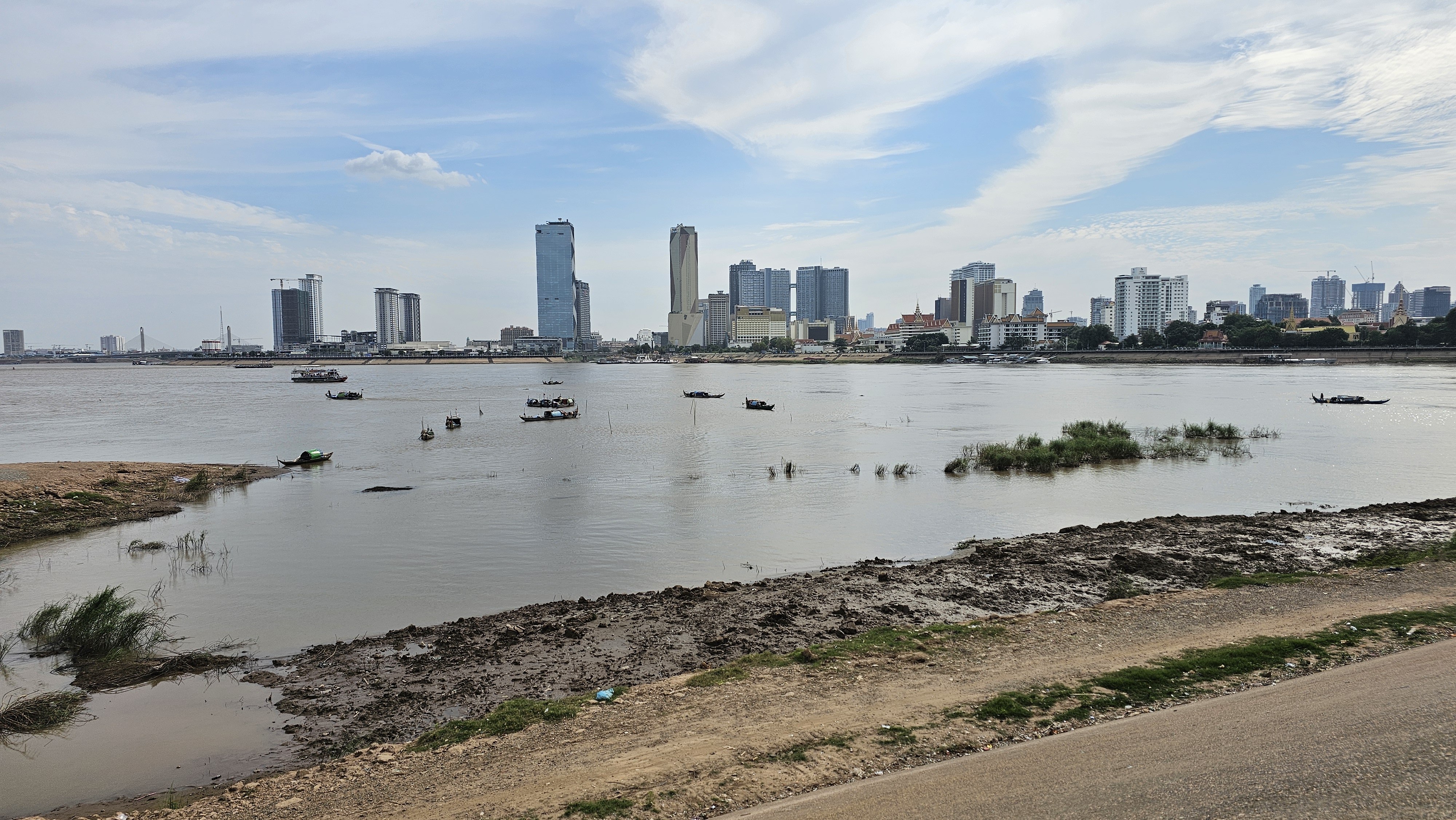
One standout experience was simply crossing over to Chrouy Changvar and viewing the city skyline from the opposite side of the river. It gives you perspective on how quickly Phnom Penh is changing. Construction cranes rise everywhere now, modern towers continue appearing, and yet much of the city still retains a roughness and authenticity that larger developed capitals lost long ago.
The food was another major highlight.
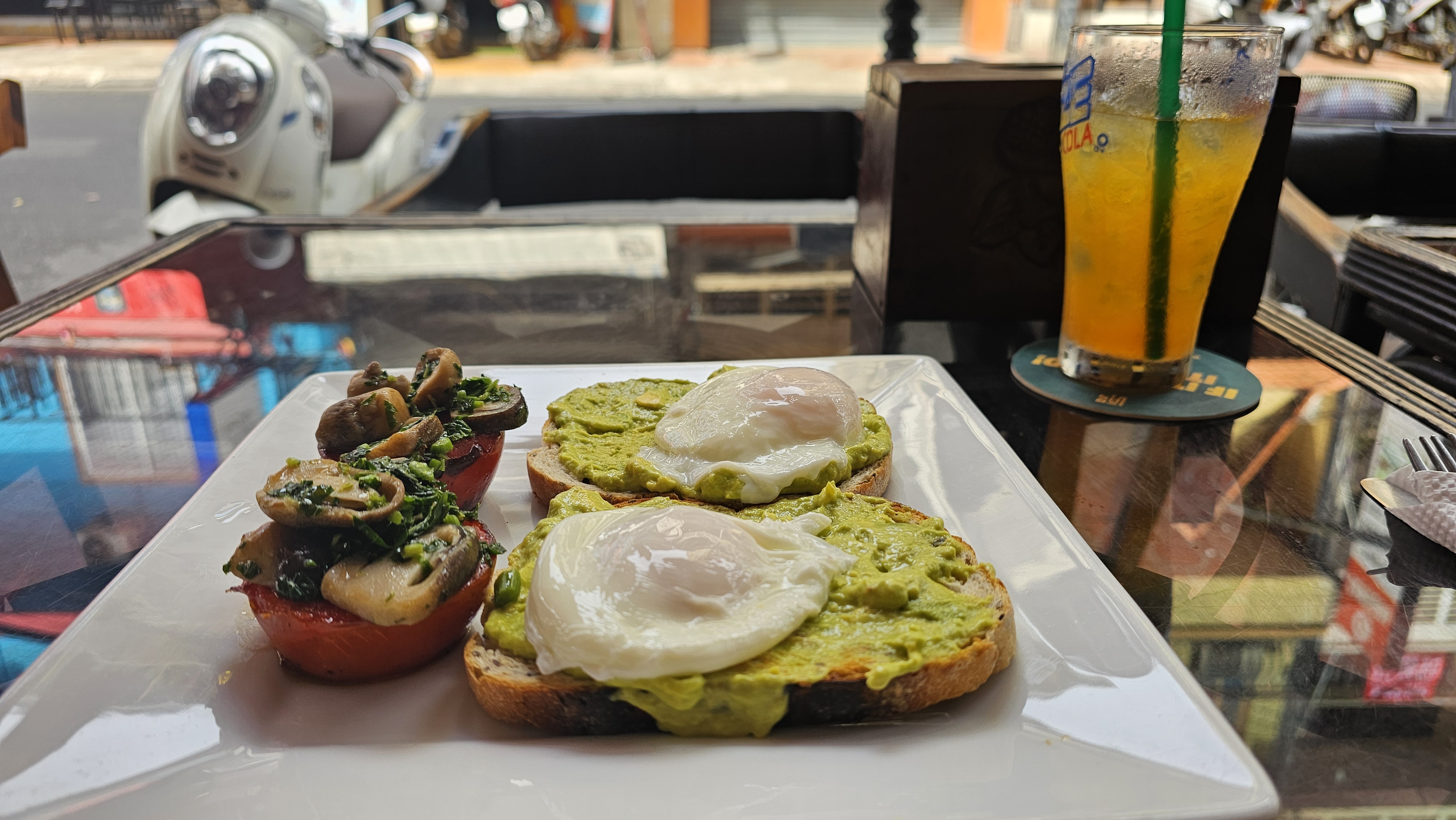
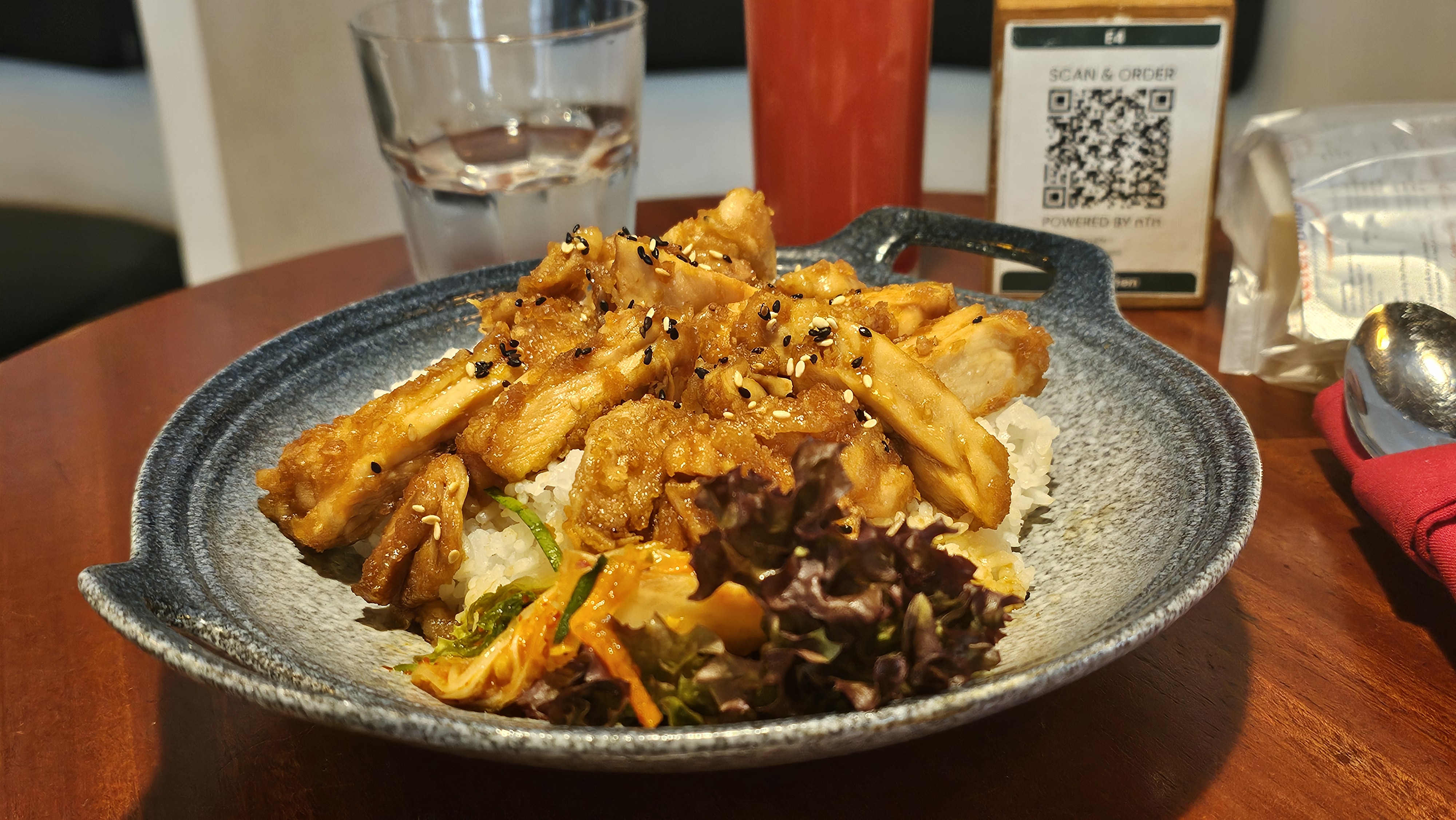
Cambodian cuisine often gets overshadowed by Thai or Vietnamese food internationally, but honestly I had some fantastic meals here. Fresh stir-fries, curries, grilled meats, iced coffees, riverfront seafood restaurants, and cheap local cafes all made eating in Phnom Penh enjoyable without ever becoming expensive.
And the bars here are genuinely good too.
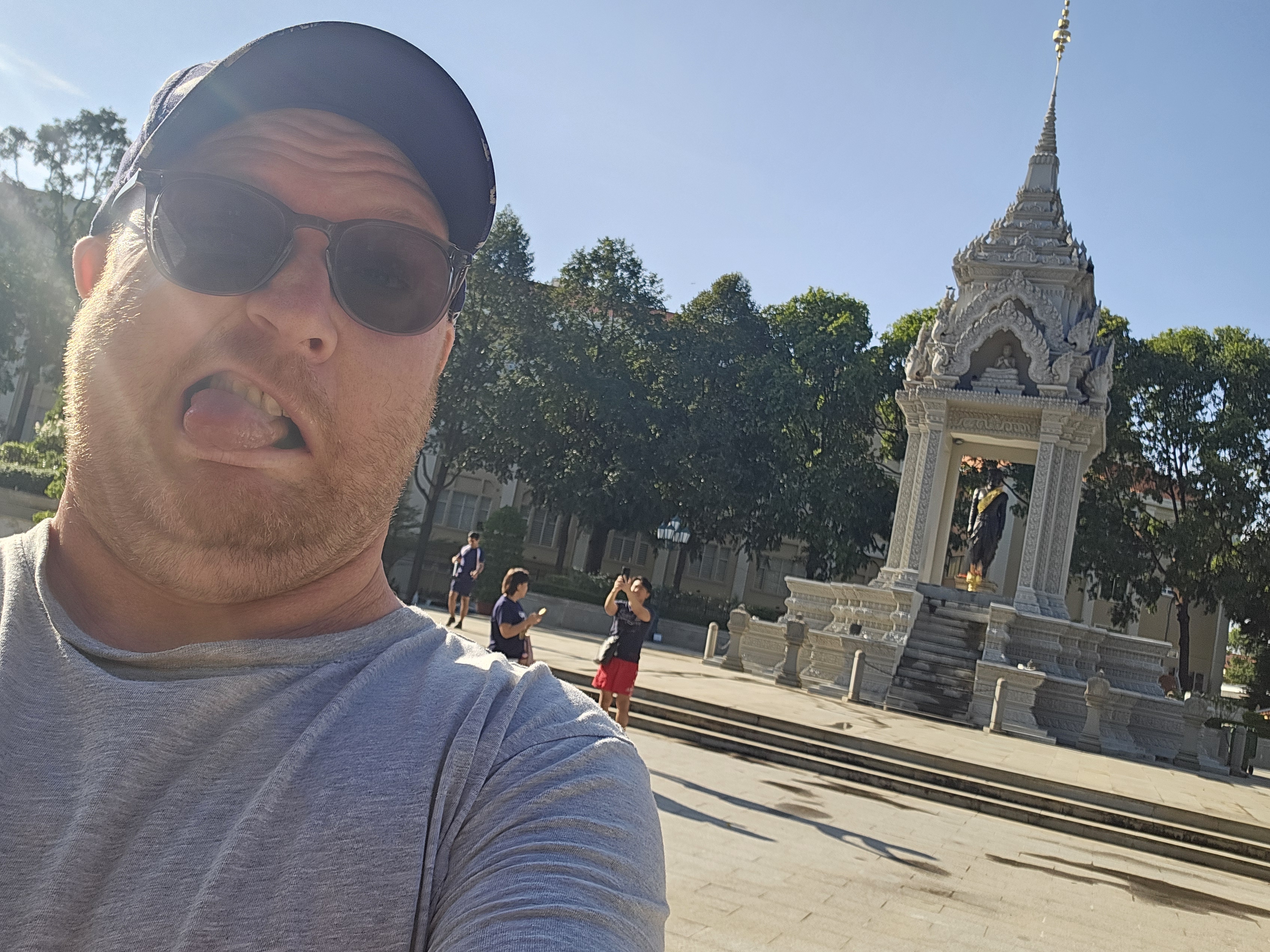
Not wild party places necessarily, although those exist as well, but relaxed rooftop bars and riverside spots where you can sit for hours without feeling rushed.
That became the rhythm of Phnom Penh for me.
Slow travel.
Slow evenings.
No pressure.
Just enjoying the atmosphere.
Honest Review
Phnom Penh is probably not going to be everyone’s favourite city in Southeast Asia.
If you are looking for massive shopping malls, world-famous luxury attractions, or nonstop excitement twenty-four hours a day, you might find it slightly underwhelming.
But I think that would completely miss the point of Phnom Penh.
This city works best when you slow down and accept it for what it is.
The pros are easy to appreciate. Friendly people, affordable prices, good food, relaxed atmosphere, improving infrastructure, and meaningful historical experiences you genuinely will not forget.
The riverside areas feel safer and cleaner than they did years ago, which is great to see. Transport is easy. Hotels are good value. Food and drinks remain affordable.
But there are frustrations too.
The heat and humidity can become exhausting quickly. Some streets still feel rough and undeveloped. Poverty is visible in certain areas. The city can feel dusty and chaotic outside the main tourist zones.
And emotionally, visiting places like the Killing Fields and Tuol Sleng absolutely affects your mood for the day.
Still, I think Phnom Penh deserves more respect than many travellers give it.
Too often people treat it as just a quick stop before heading onward to Siem Reap and the temples of Angkor.
But Phnom Penh has its own identity.
It is quieter.
More reflective.
Less polished.
And honestly, I found that refreshing.
FAQs
People often ask how many days they should spend in Phnom Penh. Personally, I think three or four days works really well. That gives enough time to visit the historical sites properly while still enjoying the slower riverside atmosphere without rushing constantly.
Another common question is whether the Killing Fields and Tuol Sleng are worth visiting despite being emotionally difficult. In my opinion, absolutely yes. They are deeply confronting experiences, but they provide important historical understanding about Cambodia and the resilience of its people afterward.
Travellers also ask whether Phnom Penh feels safe. Overall I felt comfortable during both visits, especially around the riverside and main tourist areas. Like anywhere, basic common sense matters, especially at night or when carrying valuables.
People often compare Phnom Penh to Siem Reap too. They are completely different experiences. Siem Reap revolves heavily around tourism and Angkor Wat, while Phnom Penh feels more like a functioning everyday capital city with a slower pace and more local atmosphere.
Finally, people ask if Phnom Penh is worth visiting or just a stopover city.
For me, definitely worth visiting.
Not because it has endless famous attractions, but because it offers something calmer and more thoughtful than many other Southeast Asian capitals.
Sometimes that slower energy is exactly what you need while travelling.
Gear I Use (Affiliate Links)
(Some links may earn me a small commission at no extra cost to you)
Cameras
Sony A7 IV (Full Frame)
Sony a6700 APS-C
Sensor Cleaning
APS-C Sensor Cleaning Kit
Full Frame Sensor Cleaning Kit
Storage
SanDisk 256GB Extreme microSDXC
Lexar Professional 1667x SD Card
5TB Portable HDD
Drones & Action Cameras
DJI Mini 3 Pro
DJI Air 3S
Insta360 GO (Ultra POV Cam)
DJI Osmo Pocket 3
Walking tours & scenic hikes
Drone photography & cinematic video
Travel, nature & street photography
Follow & Support My Work
Instagram: https://www.instagram.com/grandwalkingtours/
Facebook: https://www.facebook.com/DoransPhotos/
Digital Photos (Commercial Licence):
https://payhip.com/DoransPhotography
Stock Video Clips:
https://www.pond5.com/artist/dorans41258
Photography Workshops:
https://payhip.com/DoransPhotography/workshops
Events / Drone Photography Enquiries: